High Current Test Systems
In most cases direct current measurement (using the shunts internal to the PPA) is preferable not only due to convenience but it will also have the greatest accuracy and greatest bandwidth.
However, many applications demand external sensors either because of the current rating required or physical constraints.
Selecting the Best Current Sensors
There is no one-size-fits-all sensor; sensor selection is primarily a balance of accuracy, current and physical connections.
Current Transducer interface options
Frequency Vs Current
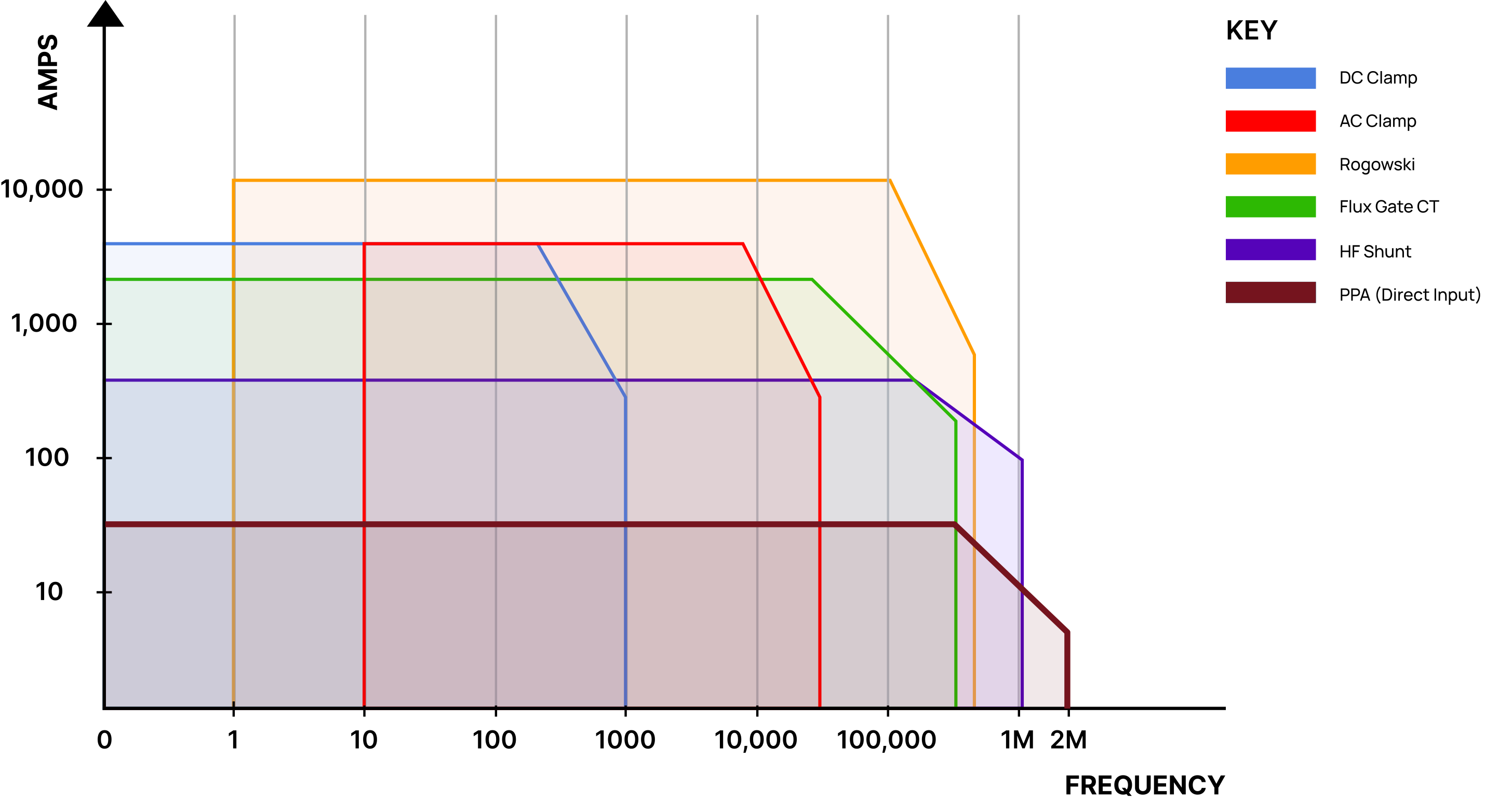
Frequency Vs Accuracy
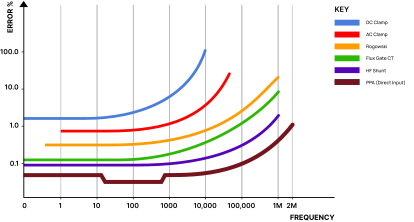
See our range of current sensing options in PPA accessories
Comparison Table
Calibration Comparison
| Sensor Type | Benefits | Limitations | Typical Application | |
|---|---|---|---|---|
| Direct Measurement (built-in) | ||||
| Accuracy | Current Limit 50Arms | R&D Lab | ||
| Convenience | Consumer goods | |||
| Phase accuracy | Calibration Labs | |||
| High-Current Shunt | ||||
| High Current | In series connection | R&D Lab | ||
| High Bandwidth | Calibration Labs | |||
| Phase accuracy | ||||
| Current Transducer (CT) | ||||
| Very High current | Additional Burden and PSU required | IEC Test Systems, Motor-Drive rigs | ||
| High CMRR | ||||
| Clamp On | ||||
| Quick Connection | Lower Accuracy | Production lines, installation checks | ||
| low cost | lower bandwidth | |||
| Rogowski Coil | ||||
| Very high current | AC only | physically large conductors | ||
| Suitable for large conductors |