What is Calibration, ISO17025 and UKAS?
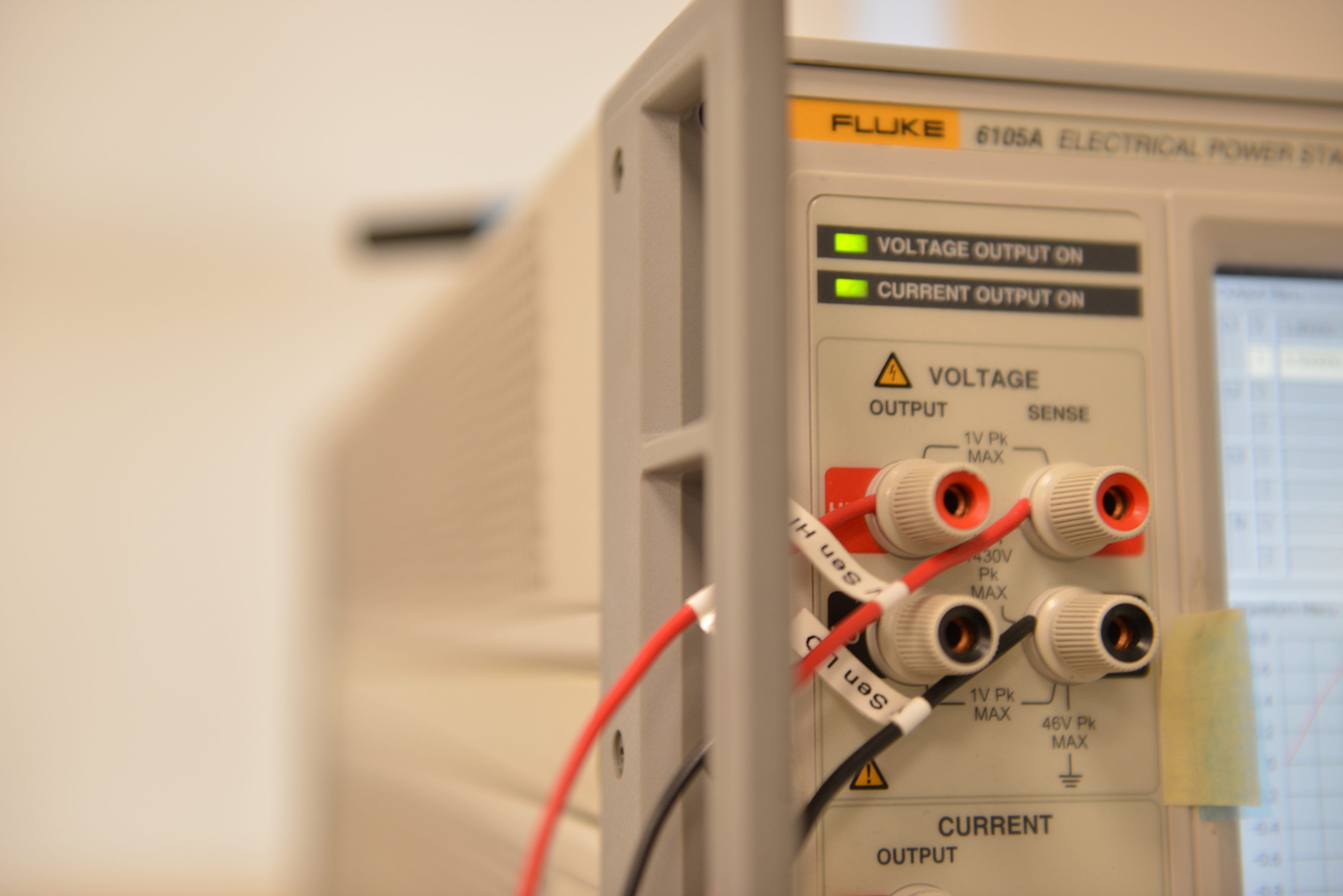
Calibration is the comparison of values derived by a measurement instrument to those of a calibration standard of known accuracy.
Calibration in the true sense does not include adjustment, it only quantifies the accuracy of a measurement. However, calibration and adjustment are often used interchangeably. All Newtons4th calibrations can be adjusted as part of the process.
ISO17025 is an international standard that defines the requirements and expectations of a competent calibration laboratory. We are accredited by UKAS (the UK’s national accreditation body), who independently verify that our people, equipment and processes meet these standards.
Are all ISO17025 labs the same? What is a schedule?
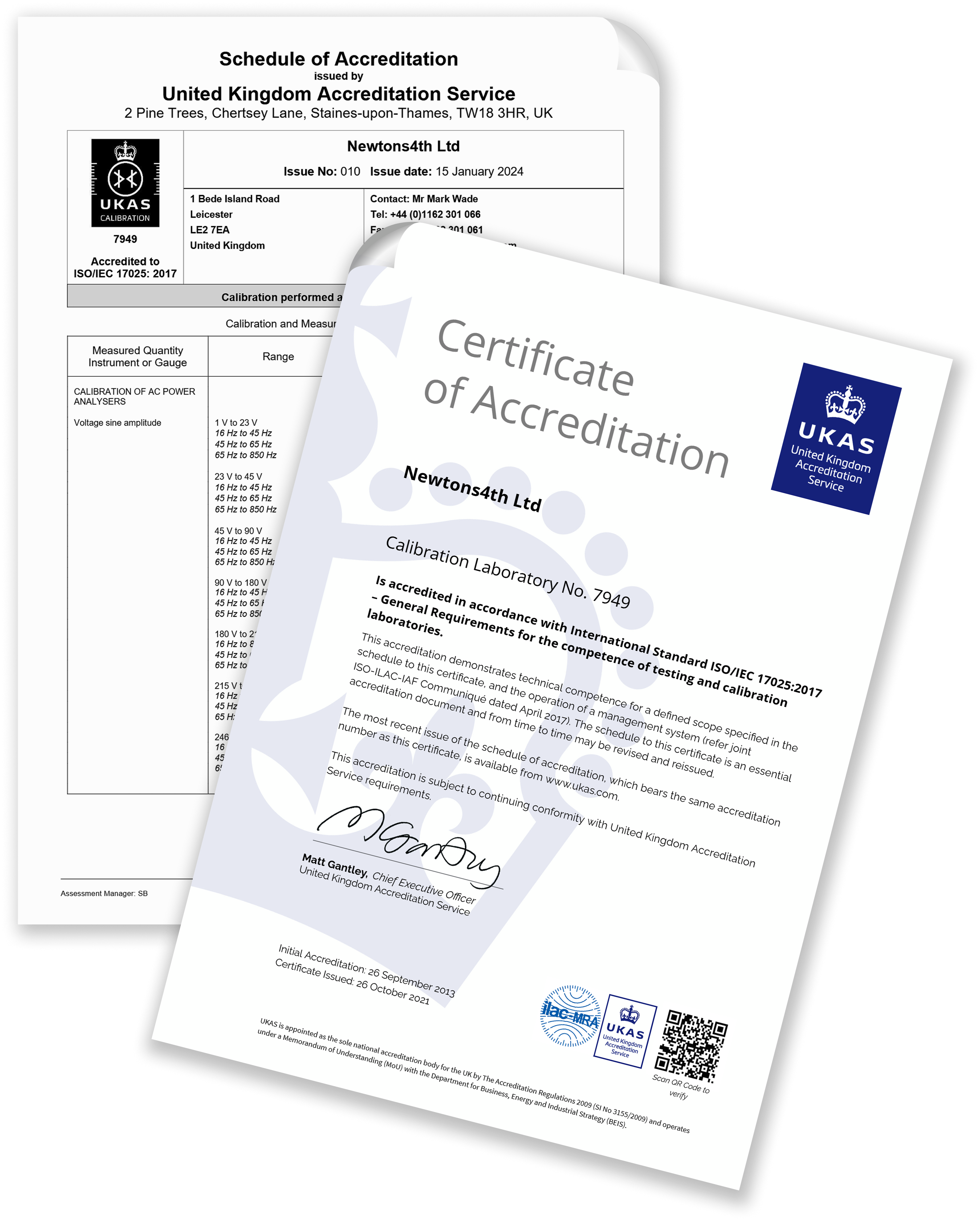
While all ISO17025 labs are held to the same standards, where they must follow good practice in processes, record keeping and formatting of reports, the offerings vary dramatically.
Labs are accredited for each type of measurement they offer. Think: Is the lab measuring electrical potential, mass or something else? Then within each measured unit, what are the ranges and limitations. What is the uncertainty of the measurement?
All of this is captured in the ‘Schedule of Accreditation’, which defines each laboratories scope of testing and calibration.
You shouldn’t just pick a lab that’s ‘ISO17025’. You need to ensure that a selected lab is suitably accredited to meaningfully calibrate your measurement instrument.
Newtons4th’s Lab is dedicated to the performance of our instruments. Offering an unrivalled focus on the calibration of precision power analyzers.
What is design validation?
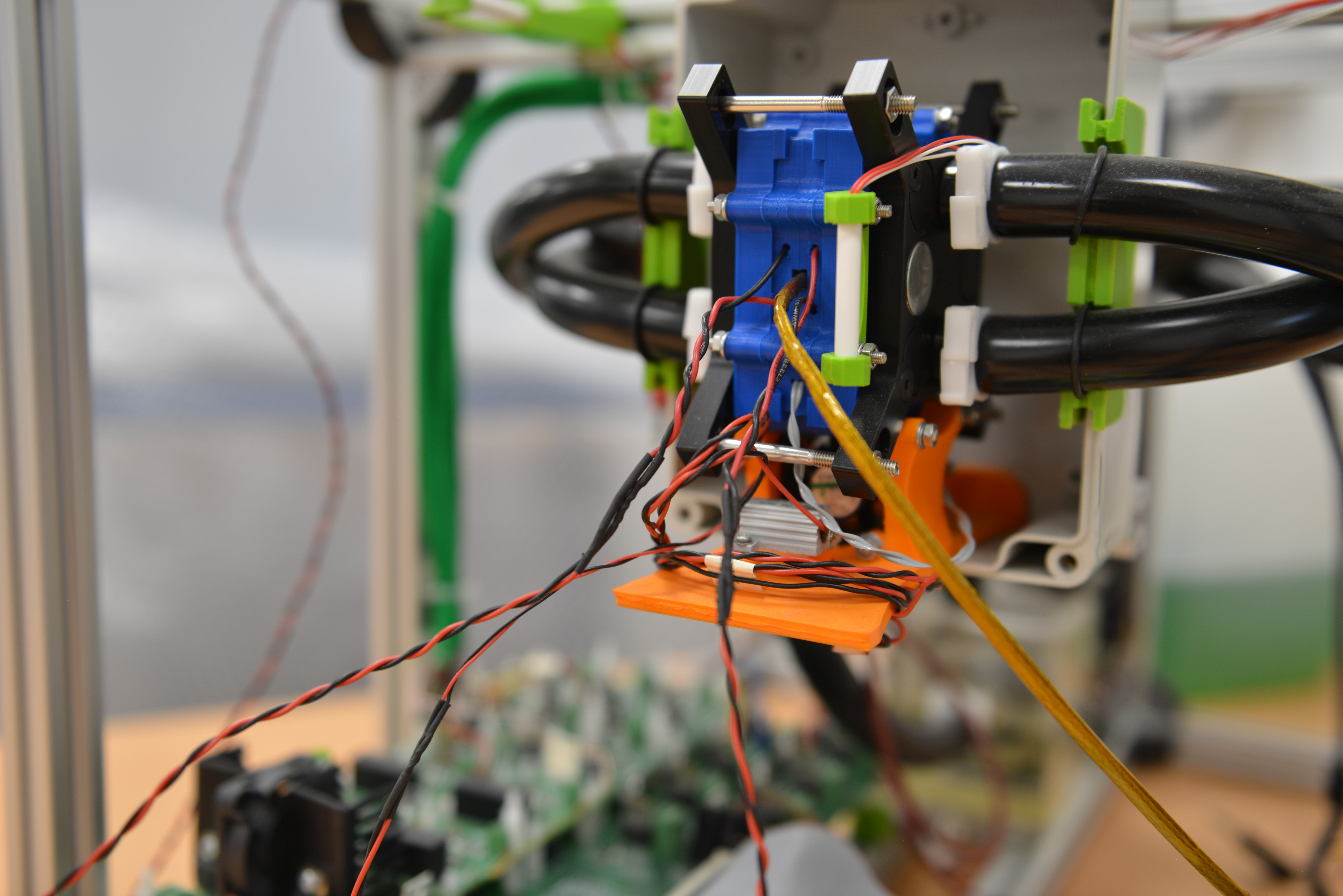
Design validation is the process of confirming that a product meets the requirements of the user. Calibration is typically performed in a controlled environment with well defined signals. The real world is not like this.
Real systems have distorted waveforms, noise, transient spikes and a myriad of other challenges that can trip up a simple Data Acquisition (DAQ) process. We’ve spent years validating and refining our products, including:
- Working with the National Physical Laboratory to understand our shunt design.
- Developing a power calibrator with Oxford University to test distorted waveforms.
And most importantly, spent years working in real design labs, testing, prototyping products in R&D, working with noisy drives in production environments, and for decades, developing leading calibration techniques in our field of metrology.
What is the ACC-IV?
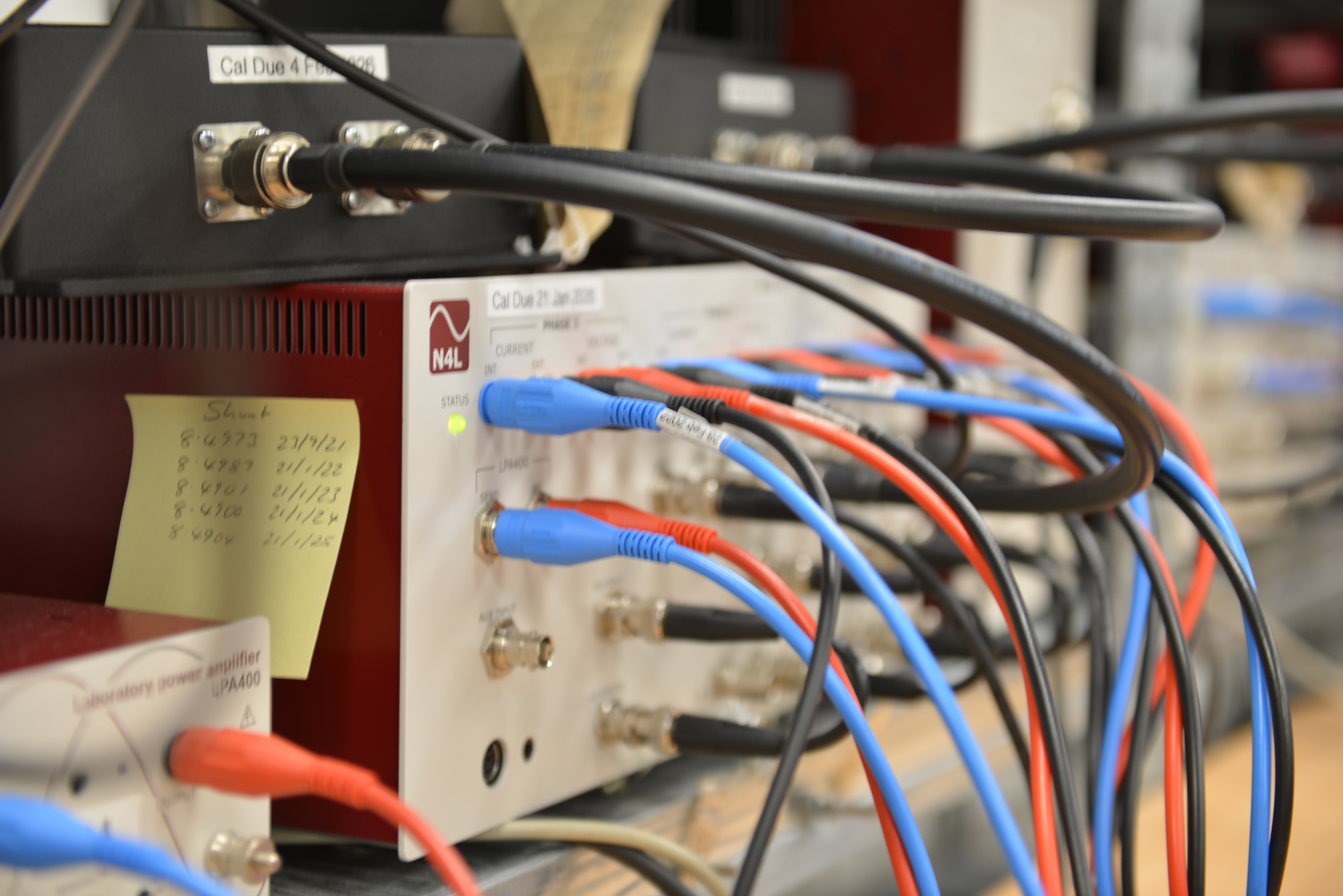
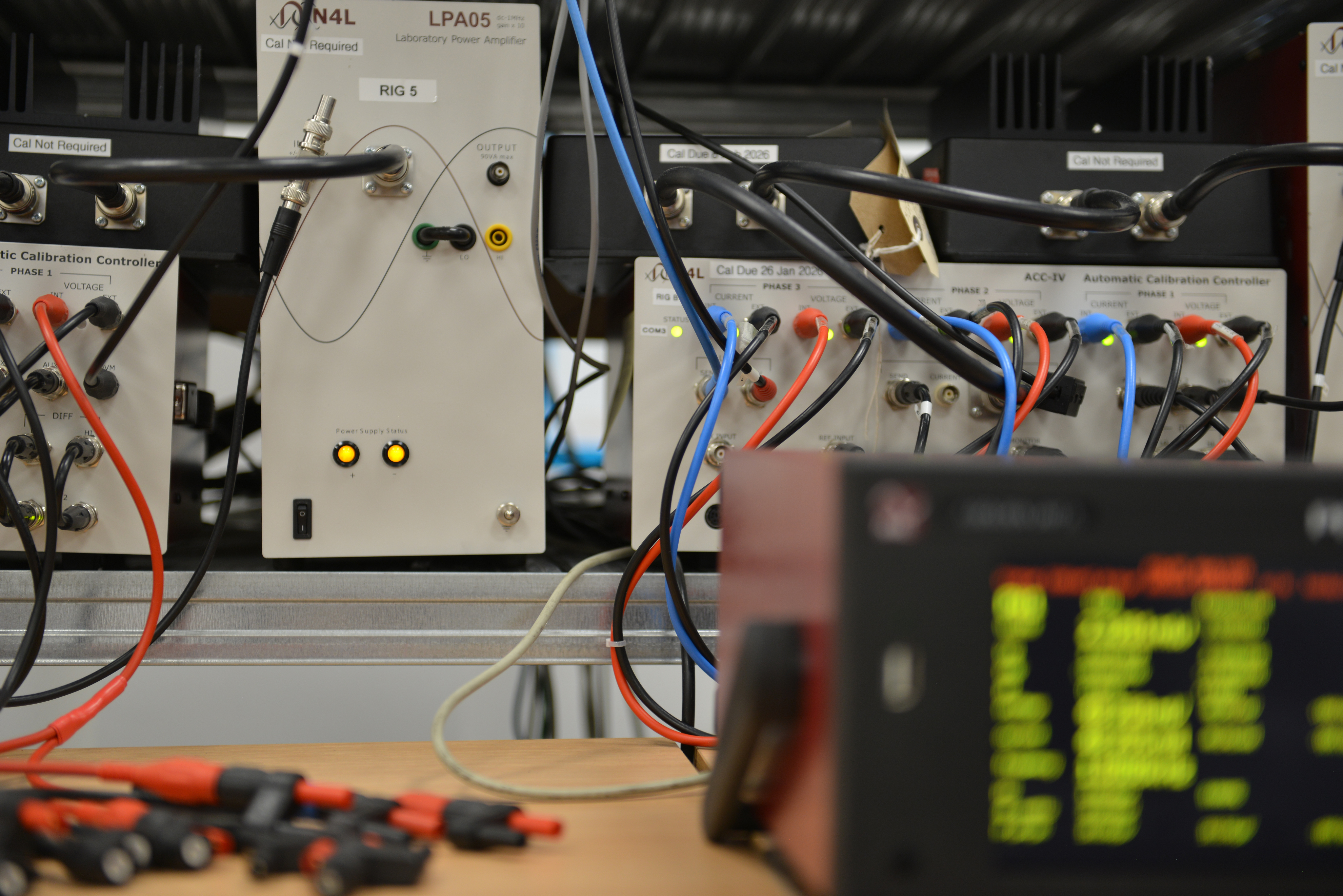
The ACC-IV is the core of our in-house calibration and adjustment. Originally developed because there wasn’t anything available to test our PSM’s, it has been expanded to include support for high voltage and current and is now on the fourth (IV) generation.
It orchestrates several amplifiers, shunts and Digital multimeters to cover all measurement ranges of our products, so we can automatically and repeatably test, adjust and calibrate our measurement instruments.
Choosing the appropriate level of calibration
All of our instruments go through the same adjustment process on the ACC-IV and use the same hardware; The level of calibration depends on required evidence and regulatory demands.
Our calibration is a compound process, with each level adding to the previous stage(s):
LEVEL
1

Certificate of Conformity
- Basic Calibration
 Dated Certificate
-
Validation of spec compliance
LEVEL
1+2

Wideband
- ISO17025 Traceable
-
Dated Certificate
-
Traceable Wideband Calibration Data
LEVEL
1+2+ 3

ISO17025 Accredited
- ISO17025 Accredited
-
Dated Certificate
-
Accredited Calibration Data
LEVEL
1+2+3+ 4+

Specialist
- ISO17025 Accredited
-
Dated Certificate
-
Full Calibration Report
-
Application Specific Calibration